
RAMAPHOSA FACES THE NATION ON MIGRATION: HONESTY MET WITH SKEPTICISM
By Mpho Dube, Editor-in-Chief
The Azanian | Truth. Fearless. Unfiltered.
AZANIAFROCOMEDIA – The Catalyst of Impact
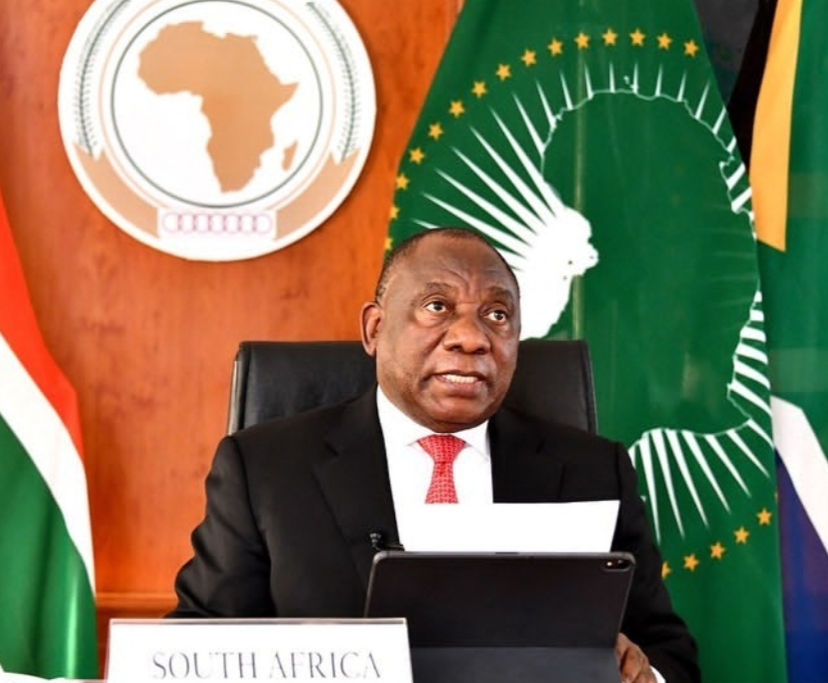
Today, Sunday 7 June 2026, President Cyril Ramaphosa did what millions of South Africans have been demanding for months. He stood at the Union Buildings and called it what it is.
A crisis. A failure of the State. A wound that has festered in our townships, our clinics, our schools and our workplaces until it exploded onto the streets as “March on March.”
For the first time since those protests moved from WhatsApp voice notes in KZN to mass action in Bloemfontein and Gauteng, a president looked the country in the eye and said the words people needed to hear.
These concerns are real. They deserve to be heard. They deserve to be addressed. He admitted there have been weaknesses in how migration has been managed, gaps in enforcement, corruption inside Home Affairs, and borders that have not held. That kind of honesty matters. You cannot fix what you refuse to name. Ramaphosa named it.
He then laid out what government intends to do. More crackdowns on employers who break immigration and labour laws. Dedicated courts to speed up deportations.
Ten thousand new labour inspectors. A biometric Digital ID and an Intelligent Population Register to kill off the green ID book that criminals and syndicates have abused for years.
Refugee reception centres moved to border posts. Harsher penalties for businesses that hire undocumented workers and pay them slave wages. A Spaza Shop Fund to give South African traders room to breathe. And envoys sent to sister African states because he insists South Africa cannot solve migration alone.
The speech was firm, measured, and rooted in the Constitution.
Ramaphosa drew a hard line against mob justice. Only authorised officials may enforce the law, he said. No one is allowed to stop someone in the street and demand papers.
He rejected xenophobia, Afrophobia and every form of hatred, and reminded the nation that South Africa can protect its borders while protecting human dignity.
Ramaphosa argued that illegal immigration is not the root of all our economic pain, and that the real answer must be growth, investment and millions of new jobs.
That was the President’s case. But within hours of the address ending, the response from the streets and from Parliament told a different story. Attention was won. Trust was not.
March on March founder Jacinta Ngobese-Zuma put it plainly. She acknowledged that the President got the attention of the nation. But she said his speech does not address the issues accordingly.
Most of the things he announced are not practical, she argued, and he has no solution to the problem that is burning in communities right now. For mothers in KZN who cannot get clinic medicine, for young men in Bloemfontein who cannot get a job at a spaza, for traders in Gauteng who watch foreign-owned shops open on every corner, promises of courts and inspectors and Digital IDs sound like delay. They want relief now, not frameworks for tomorrow.
The political parties were even harsher. The EFF rejected the address outright. Member of Parliament Sam Matiase said Ramaphosa moved at snail pace on this matter and only found his voice now because he is under pressure from African leaders.
Matiase went further and called on the President to reprimand his own ministers who he accuses of fueling attacks on foreign nationals, singling out Patriotic Alliance leader Gayton McKenzie in his new role at Sport, Arts and Culture. The EFF’s message was simple. No solution, no credibility.
The IFP took a softer tone but delivered the same warning. Spokesperson Mkhuleko Hlengwa said the President made good points, however the taste is in the pudding.
He urged that there must be leadership and political will to deal with the problem, and that government must deal with the problems accordingly. In other words, the speech passes the test of language. The next ninety days will decide if it passes the test of governance.
The MK Party was blunt. Chief Whip Philasande Mkhize said the Ramaphosa administration has failed to deal with the matter and therefore he must address this matter. He has failed. That was not critique. That was condemnation.
ATM Parliamentary leader Vuyo Zungula, a consistent critic of the President, lambasted him for lack of political will and questioned the timing after so long.
He said Ramaphosa and his Government of National Unity have no appetite to deal with the problem and found the address not profound. So this is where we stand. A president who finally spoke with clarity and honesty.
A founder of the movement that forced the conversation saying the solutions are not practical. Opposition parties across the spectrum saying the same thing in different words. Too little. Too late. No political will.
Ramaphosa’s gamble is on the rule of law and on technology. He believes South Africa can secure its borders, jail exploitative employers, and still uphold Ubuntu and human rights.
He believes the answer is not hatred of the foreigner, but enforcement of the law. That is a principled position. It is also a difficult one to sell to a community that has been waiting years for Home Affairs to issue an ID, for police to respond to crime, for clinics to have medicine.
The Azanian has always argued that migration is not a simple problem with a simple enemy. It is about collapsed systems, unemployment, poverty, corruption, and the desperation that makes people turn on each other.
Ramaphosa named those things today. He said migration pressures cannot be addressed by enforcement alone. They require peace where there is conflict, growth where there is stagnation, opportunity where there is poverty. That is true. But South Africans are asking what happens tonight, this week, this month, while we wait for peace and growth across the continent.
“March on March” forced this conversation into the open. The President responded. Now the country will measure him not by the elegance of his words but by the speed and fairness of his government’s actions.
Will illegal employers be arrested and jailed, not just fined? Will borders actually be secured with technology and personnel? Will South African traders see real support and space in their own communities? Will clinics and schools feel less pressure because the system is no longer overloaded?
Ramaphosa ended with a call for unity, determination and respect for the rule of law. South Africa has overcome division, conflict and injustice before. He says we will overcome this challenge too.
The Azanian agrees that we can. But overcoming requires more than speeches. It requires a State that works. It requires political will that matches the anger on the streets. It requires leadership that moves at the speed of people’s pain.
The President got the nation’s attention today. Now he must get its trust. Until then, the march will continue. And history will judge this “family meeting” not by what was said at the Union Buildings, but by what changed in our townships the morning after.


Comments